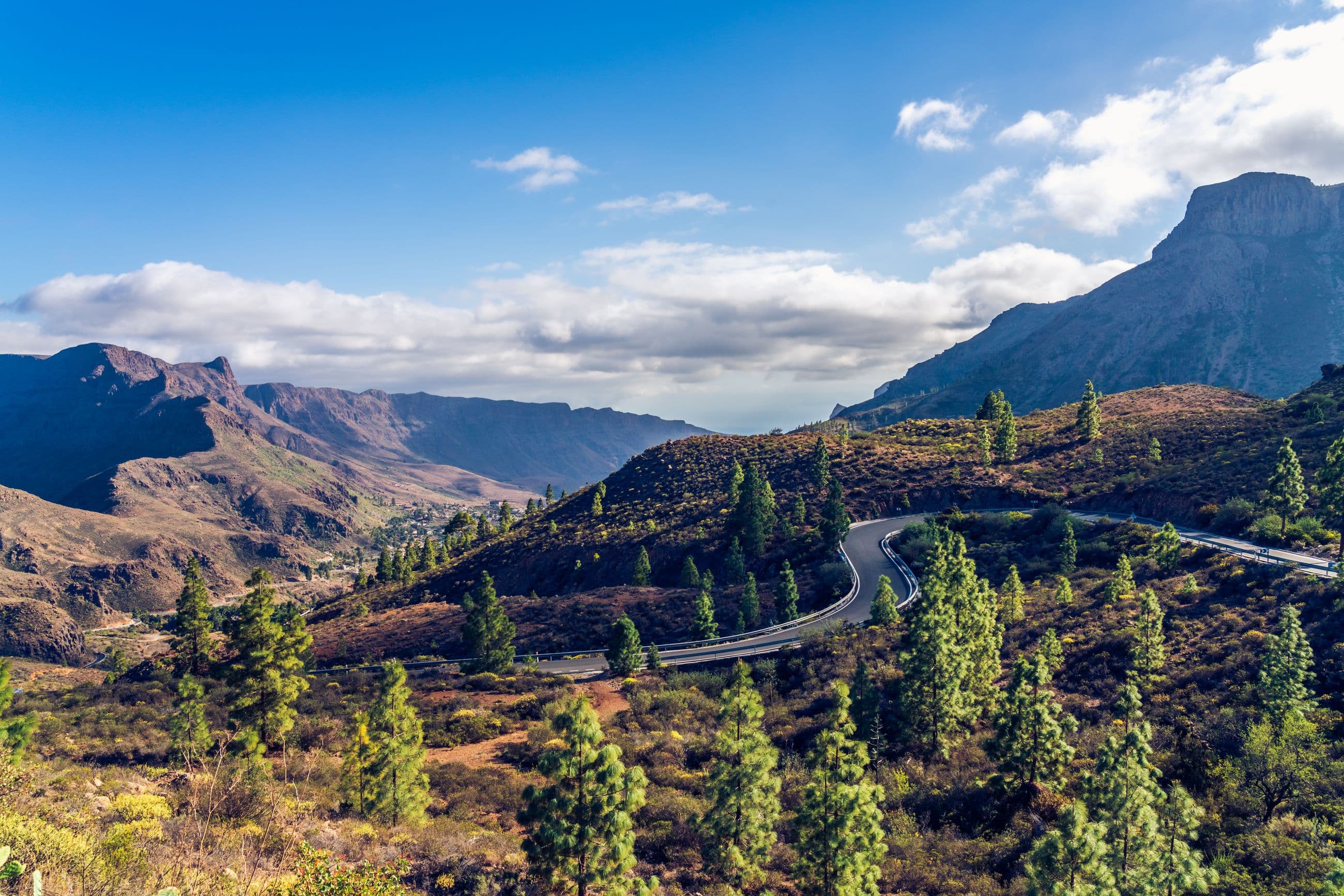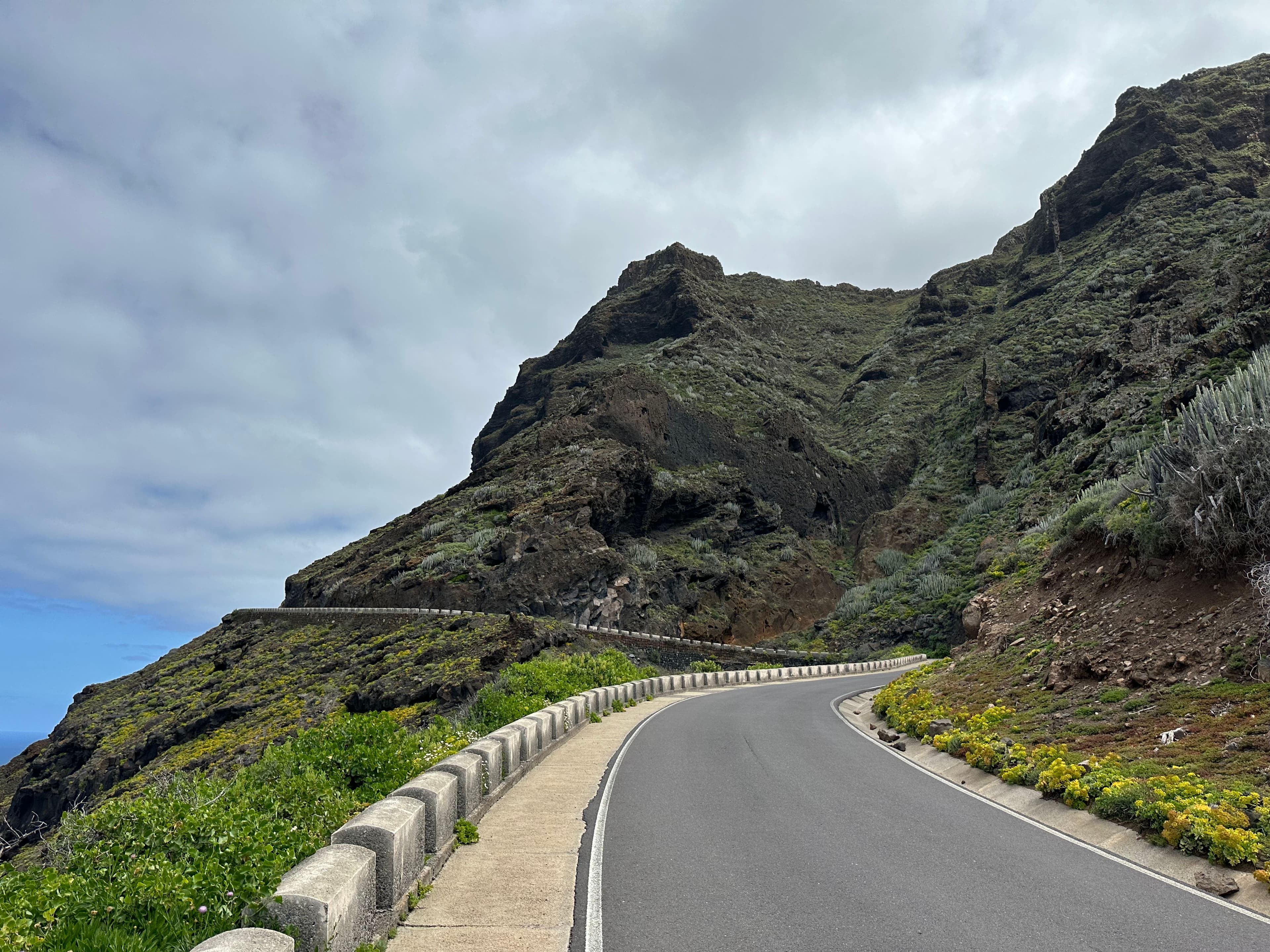
The GC-1.
The GC-1, the Autopista del Sur, runs from Las Palmas past the airport and down the east and south coasts to Puerto de Mogan. Its top speed limit is 120 km/h. Between Las Palmas and the airport it is not designated motorway; from the airport southward it is.
From the airport, Bahia Feliz is 20 minutes away, Playa del Ingles 27, Maspalomas 30 and Puerto de Mogan 45. Collecting at the airport means meeting the supplier in arrivals, where every car in that fleet is handed over.
How long does the interior take?
Routed from the airport, Roque Nublo is 50.9 km and 66 minutes away, and Puerto de Mogan 54.8 km and 45 minutes. Tejeda is 49.1 km and 65 minutes, Artenara 54.0 km and 74 minutes, and Pico de las Nieves 37.5 km and 44 minutes. The two pick-ups for car hire in Gran Canaria are the airport and the southern resorts, and these times are routed from the airport.
From the airport
Puerto de Mogan
45 min
54.8 km · on the coast
From the airport
Roque Nublo
66 min
50.9 km · in the interior
From the airport
Teror
44 min
36.7 km · in the north
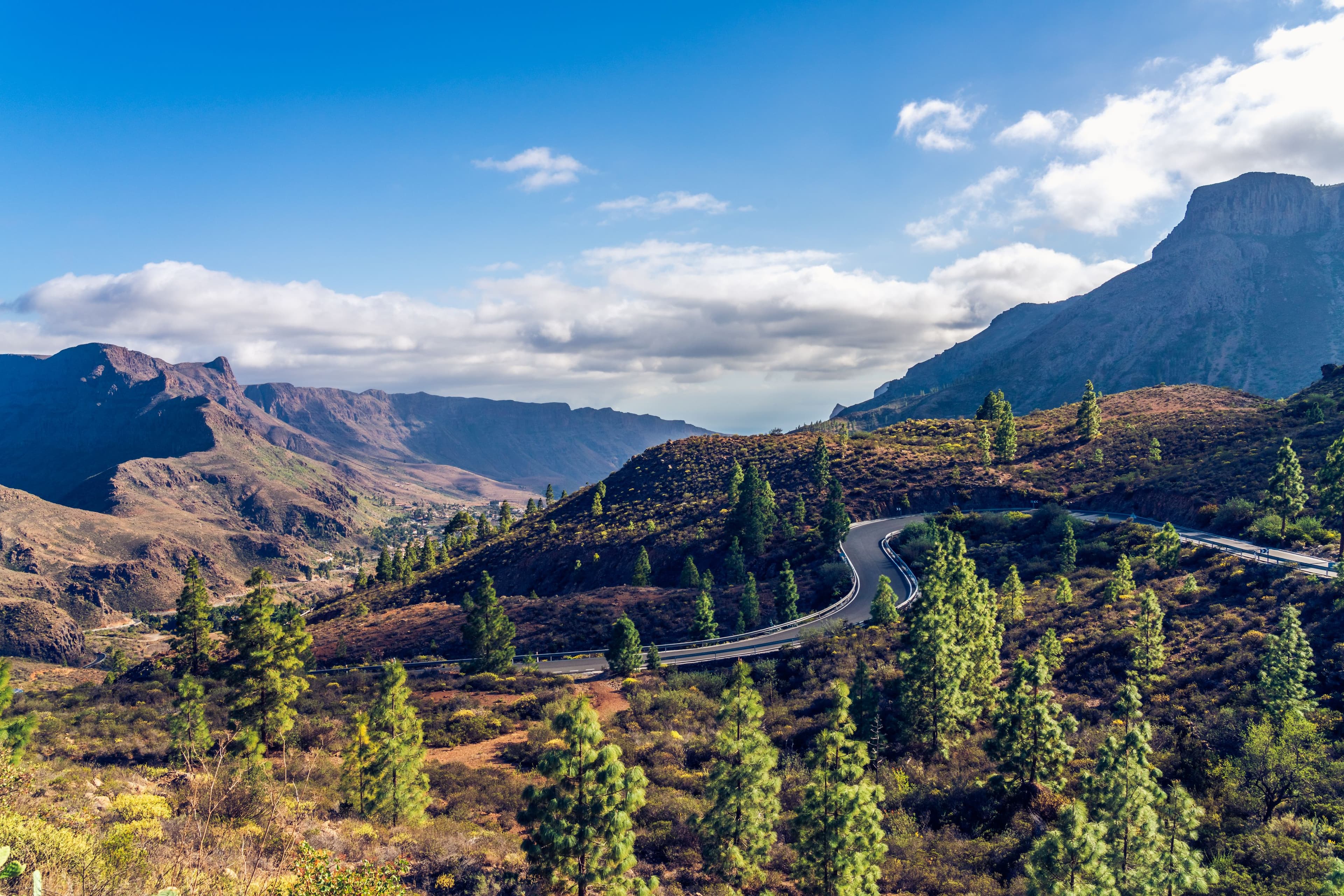
The interior
The routed drive to Roque Nublo averages about 46 km/h, and the drive to Puerto de Mogan about 73 km/h. Each car's daily mileage allowance is shown on its listing, and from the airport a day to Roque Nublo and back is about 100 km. The road-trip guide has four day routes, and each is routed leg by leg.
What standard cover excludes.
Standard cover on a hire car excludes the wheels, the undercarriage, the windscreen and the interior.
Wheels
Not covered
Undercarriage
Not covered
Windscreen
Not covered
Interior
Not covered
The cover included with each car is stated on its listing.
Cover is void if damage is deliberate or results from neglect. After an insured incident the renter must notify the supplier immediately and obtain a police report, unless the supplier agrees otherwise. Hire cars may only be driven on paved public roads.
Compare cover, deposit and mileage.
Every car in the live search shows its cover level, deposit and mileage allowance before you book.
Search live pricesSpeed limits, fines and fuel.
The general limits for cars are 120 km/h on motorways and dual carriageways and 90 km/h on conventional roads. In towns the limit is 50 km/h on streets with two or more lanes each way, 30 km/h on streets with one lane each way, and 20 km/h where road and pavement are one level. Signs can set other limits.
The alcohol limit is 0.5 g/l in blood or 0.25 mg/l in breath, and 0.3 g/l or 0.15 mg/l for drivers in their first two years with a licence. Holding a phone while driving carries a 200 euro fine and 6 licence points; calls are allowed only hands-free, without earphones. Seat belts are compulsory in every seat, and children 135 cm tall or shorter must use an approved child restraint.
A driver who cannot prove residence in Spain pays a traffic fine on the spot, by credit card or in cash, or the car is immobilised. Paying on the spot or within 20 calendar days reduces the fine by 50%. Cars must carry a V-16 warning light, which replaced warning triangles on 1 January 2026, and a reflective vest. The emergency number is 112.
Under the rental conditions, fuel, parking, fines and tolls are the renter's responsibility. The car goes back with the fuel level it came with: if the level is lower, the renter pays the difference at the rental company's rates; if higher, there is no compensation. Kerb colours apply on the drive north into the capital and in the resorts: in Las Palmas, green lines mark resident parking, blue lines paid parking and white lines free parking. Under national rules, a broken yellow line means no parking and a solid yellow line means no stopping or parking. Fuel in the Canary Islands carries a regional tax instead of Spain's hydrocarbons tax, and Spain's competition regulator found the Canaries had the lowest pump prices in Spain in 2025.

Roque Nublo: 66 minutes from the airport
Which cars are in which fleet?
Seven and nine seat vehicles are in the airport fleet, listed as a bigger car for the family, with the seat count on each listing. Standard cover excludes the same four parts on every size of car.
Seat count, gearbox and mileage allowance are shown on each car's listing, whichever fleet it comes from.
Automatics are in the airport fleet. In every window measured, every one of the cars delivered to Playa del Ingles and the other southern resorts has been manual. The search shows the gearbox on each car.
Cars for the dunes end of the south coast are delivered to your address. In every window measured they held no deposit and had uncapped mileage.
Everything you should know.
Answered from the rental conditions and Spanish traffic law.
What are the speed limits?
For cars: 120 km/h on motorways and dual carriageways, and 90 km/h on conventional roads. In towns the limit is 50 km/h on streets with two or more lanes each way, 30 km/h with one lane each way, and 20 km/h where road and pavement are one level. Signs can set other limits.
What happens if I get a fine?
A driver who cannot prove residence in Spain pays the fine on the spot, by credit card or in cash in euros, or the car is immobilised. Paying on the spot or within 20 calendar days reduces the fine by 50%. Under the rental conditions, fines are the renter's responsibility.
What does the insurance not cover?
Standard cover excludes damage to the wheels, undercarriage, windscreen and interior. Cover is void if damage is deliberate or results from neglect, and after an insured incident you must notify the supplier immediately and obtain a police report unless the supplier agrees otherwise.
Can I drive on unpaved tracks?
No. The rental conditions permit paved public roads only.
Who pays a parking fine?
The renter. Under the rental conditions, fuel, parking, fines and tolls are the renter's responsibility.
What must the car carry?
Cars in Spain must carry a V-16 warning light, which replaced warning triangles on 1 January 2026, and a reflective vest. The emergency number is 112.